Free Drop No. 2 · Spring 2026
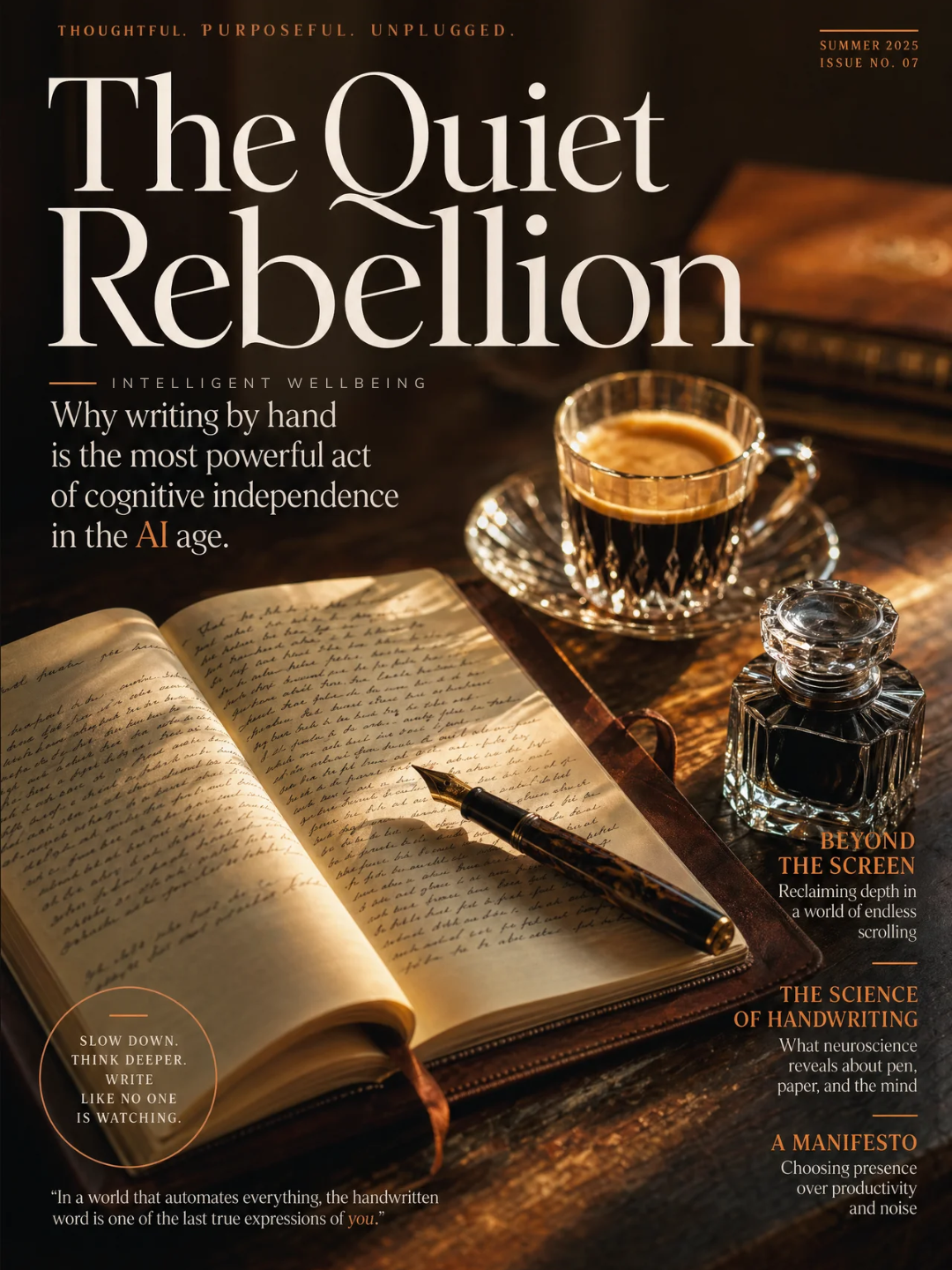
The Quiet Rebellion
Why writing by hand is the most powerful act of cognitive independence in the AI age. A field guide to sharper thinking, deeper memory, real focus, and a life that does not run through a screen.
Modern screens are quietly making everyone dumber. The most successful, most creative, most independent thinkers never abandoned pen and paper. There is a reason for that, and it is not nostalgia. It is rebellion.
Modern screens are making everyone dumber. The most successful people quietly never stopped writing by hand.
There is a reason the most thoughtful, most independent, most creative people you admire still keep a notebook. It is not aesthetic. It is not nostalgia. It is something far more important. And once you see it, you cannot unsee it.
For the first time in human history, a single generation has outsourced its memory, its planning, its writing, its thinking, and now even its reasoning to machines. The phone remembers the appointment. The calendar tells you what to do next. The autocomplete finishes your sentence. And lately, an AI tool finishes your idea before you have actually had it.
The convenience is real. So is the cost. Every task you hand to a screen is a task your brain stops practicing. The muscle does not just get weaker. It gets quieter. Less connected. Less yours.
There is a small group of people who never went all in on this trade. Writers, founders, monks, scientists, artists, thinkers across every era. They all noticed the same thing. Something happens on paper that does not happen on a screen. Something old. Something the brain loves. And as it turns out, modern neuroscience just confirmed exactly what they were sensing.
Every task you hand to a screen is a task your brain stops practicing. Handwriting is the one place that trade reverses.
Researchers attached 256 electrodes to students writing and typing. What they found shocked them.
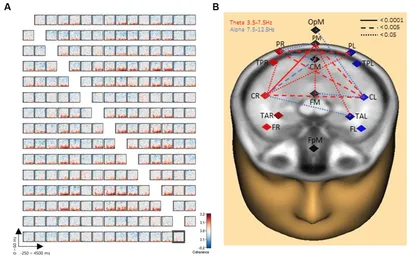
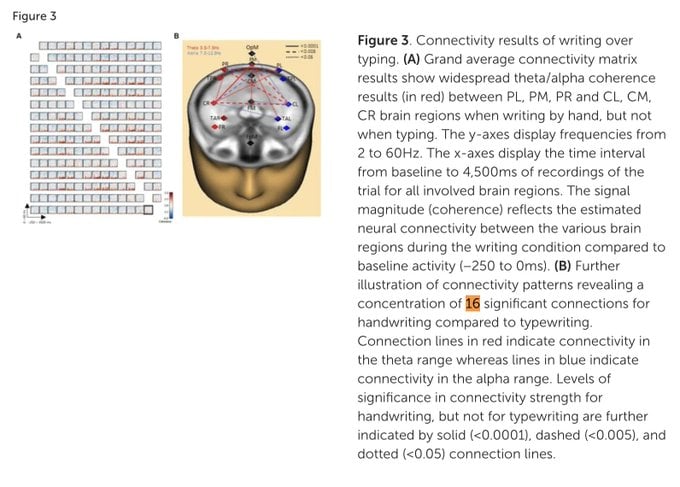
Norwegian neuroscientists Audrey van der Weel and Ruud van der Meer ran one of the most thorough EEG studies on handwriting ever conducted. The study, published in Frontiers in Psychology in 2023, captured the brain in extraordinary detail while participants wrote words by hand, then typed the same words on a keyboard. The data was collected from 256 electrodes across the scalp, sampling brain activity many times per second.
The contrast was not subtle. Handwriting lit up extensive theta and alpha brain wave patterns across the parietal and central regions of the brain. These are the exact frequencies tied to memory formation, deep learning, and the kind of focused, integrative thinking that produces actual understanding. Typing produced almost none of that activity. The brain was awake, but quiet.
Then came the part that genuinely stopped people in the field. The researchers identified 16 distinct neural connections that lit up during handwriting and did not appear during typing. Sixteen. That is not a small difference. That is an entire network the brain only enters when a hand is forming letters on a page.
Typing is one motion repeated. Each key looks the same. Each press feels the same. But every handwritten letter is its own miniature dance, a unique sequence of pressure, angle, curve, and timing. The brain treats it the way it treats movement, art, and craft. Connected. Layered. Whole.
Handwriting is not a slower way to type. It is a different brain state entirely.
The researchers were specific about what those 16 connections mean. They reflect the brain stitching together regions that handle vision, motion, language, and memory at the same time. That kind of cross-talk is exactly what produces deep encoding. It is why something written by hand is remembered differently. It is why ideas you scribble onto paper feel more yours than ideas you type into a doc.
There is a reason for the old wisdom about writing things down to remember them. There is a reason every successful person you have ever read about kept a journal. There is a reason students who take handwritten notes outperform students who type them, even when the typists capture more words. The hand is not transcribing. The hand is thinking.
The brain wave bands tied to memory consolidation and deep learning. Active during handwriting. Mostly absent during typing.
The number of distinct neural pathways that lit up only when participants wrote by hand, not when they typed.
More connections during encoding means stronger memory, sharper focus, and more durable learning later.
There is one more thing in the study most coverage skipped. Handwriting did not just light up more of the brain. It lit up the regions that talk to each other most. The brain treats handwriting the way it treats movement and craft, not the way it treats data entry. It treats your hand like an instrument, not a keyboard. And what you do with an instrument over time is something a keyboard simply cannot replicate.
The hand is not transcribing. The hand is thinking. And the brain knows the difference.
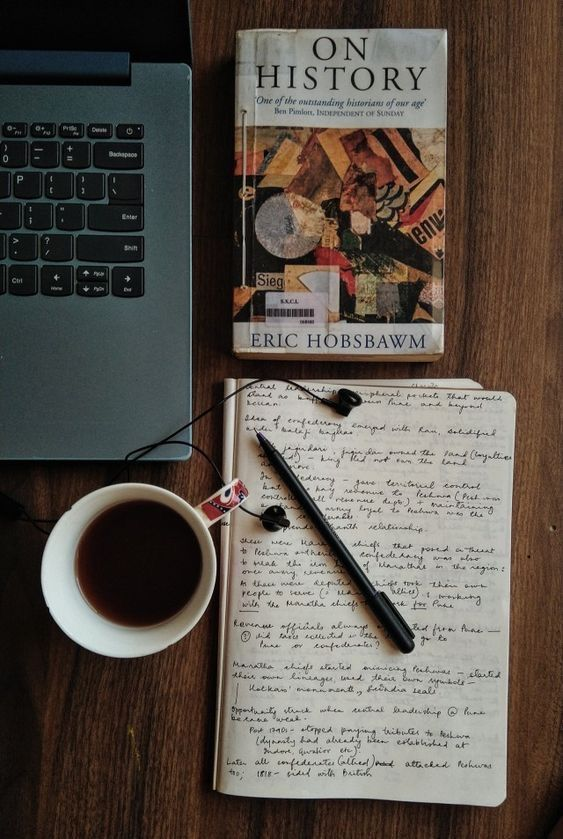
Coffee. Notebook. Pen. No notifications.
The ritual matters more than people realize. There is a reason the most creative minds in history protected this exact setup. Quiet morning. Hot drink. Real paper. A pen that feels like something. The phone face down or, better, in another room entirely.
A screen carries every notification, every unread message, every algorithm calibrated to interrupt your attention. A blank page does not interrupt anything. It just waits. That patience changes how the mind operates. The brain settles. The thoughts deepen. The connections start to form. None of that happens with a glowing rectangle in your hand.
There is also something to be said for the tools themselves. A cheap plastic pen will write. But the right pen turns writing into something you actually look forward to. A classic ink pen with weight in the hand makes the page feel like a real surface and the act feel like a real choice. If you want to push the ritual further, an old fashioned glass inkwell on the desk will do something to the morning that no Notes app ever will. None of this is required. All of it makes the rebellion feel like a craft.
Your brain treats handwriting like movement, not communication
A typed file is uniform. Every letter the same size. Every line the same color. Every page identical to every other page. A handwritten page is a record. The day you were tired shows in the letters. The day you were excited shows in the letters. The phrase you circled three times shows in the letters. The page becomes a small artifact of your actual mind on that actual day.
This is part of what is being lost. People who only type lose the texture of their own thinking. People who write by hand keep it. Years later they can open a notebook and meet themselves on the page in a way no document folder will ever recreate.
There is also the simple fact that handwritten goals are remembered, repeated, and pursued differently than typed ones. Anyone who has done both for long enough knows the difference. The neuroscience now offers a reason. When intention is written by hand, the brain encodes it through the same pathways that drive memory and motion. Typing a goal is recording it. Writing a goal is rehearsing it.
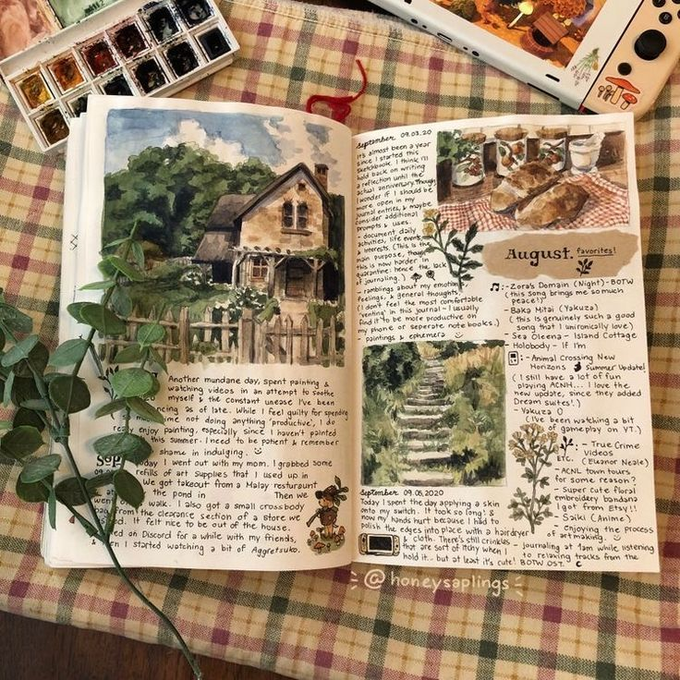
Typing a goal is recording it. Writing a goal is rehearsing it.
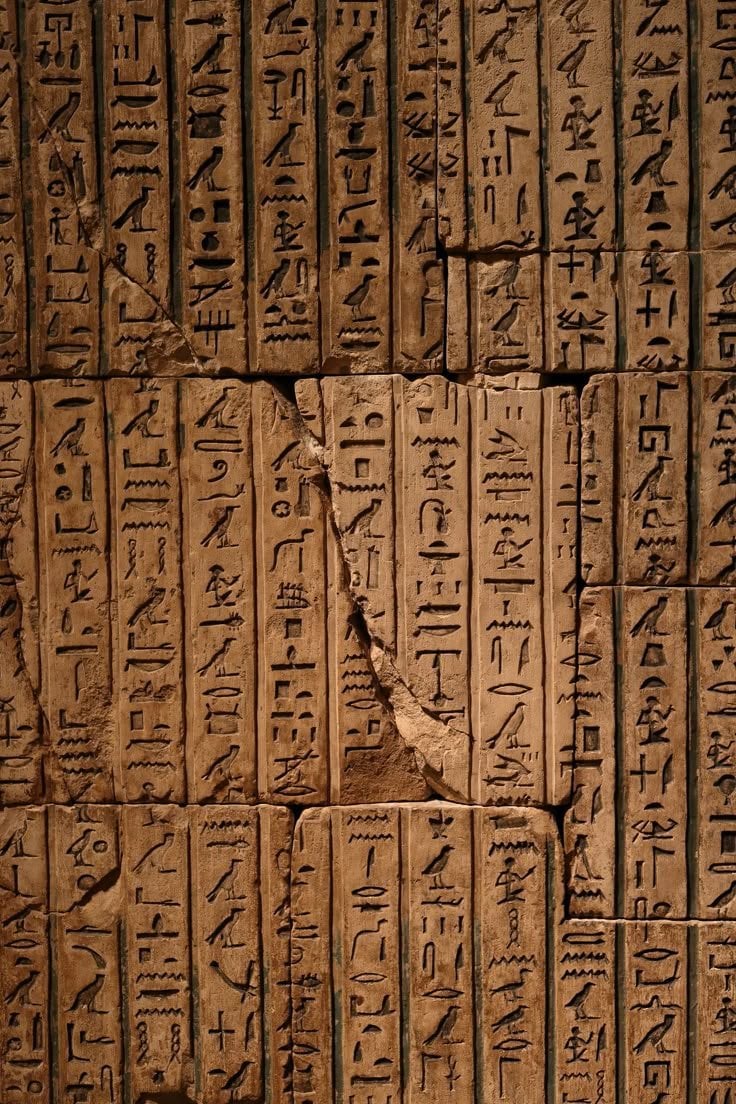
Every great civilization treated handwriting as sacred. Modern science finally caught up.
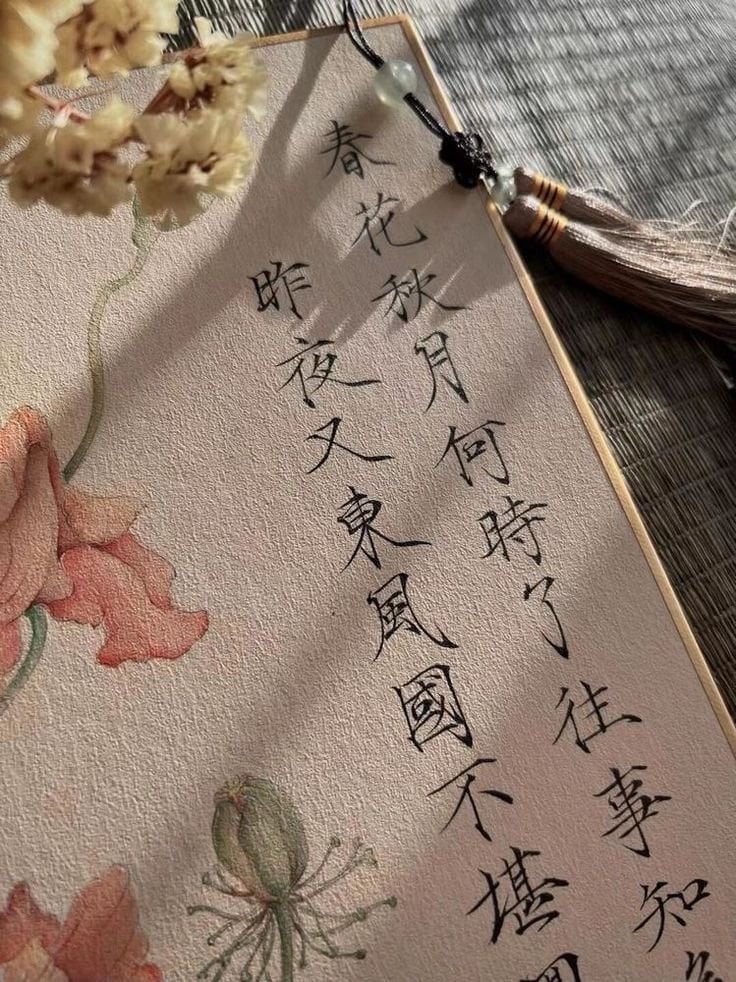
Egyptian scribes were a priest class. Their script was considered the language of the gods. Medieval monks copied texts by hand for years on end and considered the act itself a form of prayer. Japanese calligraphy is still treated as a discipline of mind and body, where the goal is not the words but the state of being while writing them.
Across Europe, grimoires were written by hand because the act of writing was believed to give the words their power. Across the Islamic world, the calligrapher was treated as both artist and theologian. Across Chinese and Japanese tradition, a person’s handwriting was considered a window into their character. None of this was sentimental decoration. These were entire cultures noticing, over centuries, that something happens in the act of forming letters that does not happen in any other act.
Modern people often dismiss this as ancient superstition. The new science suggests they were tracking something real. The hand becomes a conduit for something the conscious mind alone cannot reach. Whether you call that flow, prayer, intuition, or theta wave activity, the mechanism turns out to be physical. And it shows up in every tradition that took thinking seriously.
The hand has always been the slowest, most reliable teacher
Japanese students still learn kanji by drawing each character thousands of times. Not because there is no faster method. There are dozens. They do it because the hand teaches what the eye alone cannot. The character is not memorized. It is built into the body.
This is what is being quietly traded away. A generation that has never had to memorize a phone number, a route, a passage, or the spelling of an unfamiliar word is also a generation whose brains are losing the practice of holding things on their own. The convenience is invisible. The cost is invisible too, until something asks the brain to perform without the screen, and the brain has forgotten how.
Handwriting is not a return to a less efficient era. It is the return of an entire skill set the body still remembers and the screen has been silencing.
Handwriting is not a return to a less efficient era. It is the return of a skill set the body still remembers and the screen has been silencing.

Every object in this collage belongs to the same family
At a quick glance, some of these objects might seem out of place. A compass next to a journal. A wax seal beside an inkwell. What does any of that have to do with handwriting, or with rebellion?
Everything, actually. Every object in this image is a tool a person has to choose to use, and a tool that leaves the user’s own mark when it is used. The compass does not predict your direction. You decide it. The wax seal does not auto-generate a signature. You press it yourself, into something that matters enough to seal. The pen does not autocomplete your sentence. The inkwell does not refill itself. The journal does not summarize your day for you.
That is the whole thesis of this drop in one frame. These are tools that put the human back in the loop. They are slow on purpose. They require attention. They reward intention. And every one of them is a small refusal to let a screen, an algorithm, or a model do the thing that is actually yours to do.
A morning spent with a compass, a journal, an ink pen, and a real cup of coffee is not retro decoration. It is a practice. It is the same practice the scribes had, the calligraphers had, the founders had, the writers had. A quiet alignment between your hand, your mind, and the day in front of you. The phone can wait. The model can wait. This is the part that does not get outsourced.
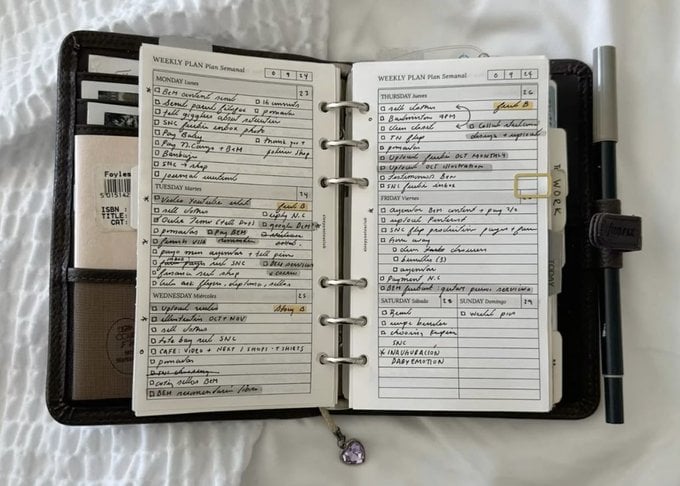
Five small acts that move the rebellion off the screen and onto the page
None of this requires a lifestyle overhaul. The goal is not to perform writing. The goal is to make a quiet, consistent return to a tool the mind already knows how to use better than any device.
-
1
Carry a notebook everywhere
Not as decoration. As a tool. The point is friction-free capture, the moment the idea arrives, before a screen takes it. A simple customizable real leather journal works because it survives years of being thrown into bags, and it earns its character on its own.
-
2
Write the first thing of the day by hand
Before email. Before the phone. Three lines minimum. The goal for the day. One thing on your mind. One thing you do not want to forget. This alone will change how the rest of the day unfolds.
-
3
Take real notes during real conversations
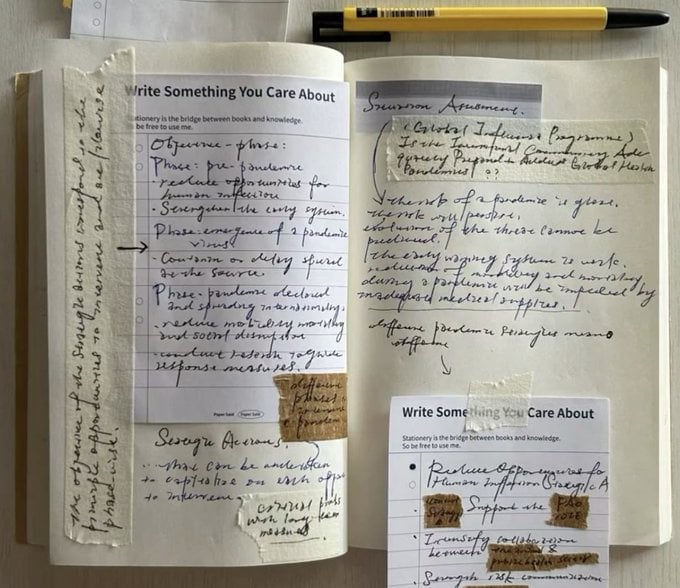
Meetings, phone calls, books, podcasts. Skip the AI summary. Let the hand do the encoding. You will remember what mattered, and you will catch what an algorithm would have flattened.
-
4
Write goals where you will see them again
Goals typed into an app are forgotten the moment the app is closed. Goals written by hand stay in the body the way the brain encoded them. Rewrite them weekly. Watch what happens.
-
5
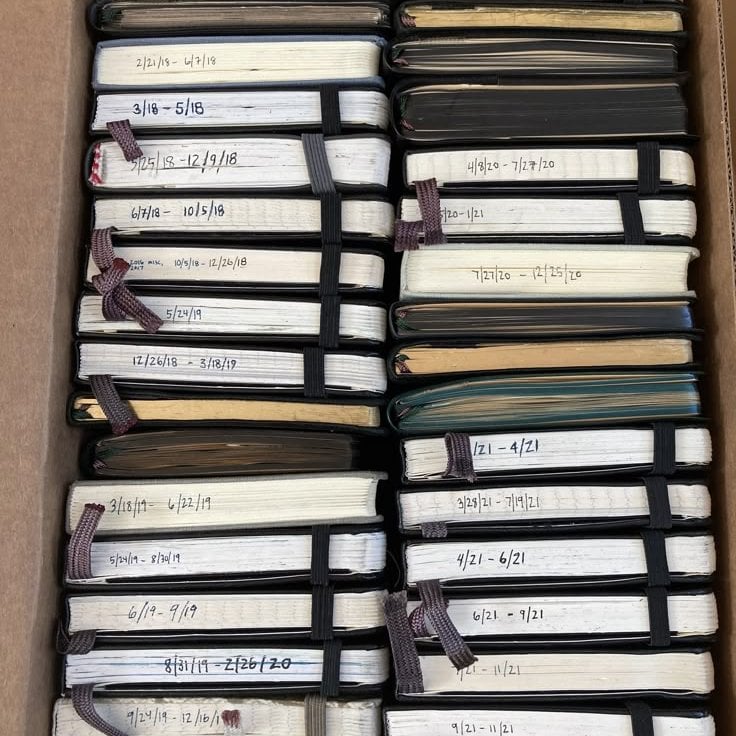
Date the notebook and keep them all
A single shelf of dated notebooks is one of the most quietly powerful records a person can build. Every page is proof of the rebellion. Every shelf is a life that is still your own.
Every word you write by hand is an act of cognitive sovereignty
AI is not the enemy. The quiet erosion of independent thought is the enemy. The slow trade of every memory, every plan, every original sentence in exchange for a prediction engine that does it slightly faster. Convenience is the wrapping. Dependence is the product.
Handwriting is the smallest possible answer to the biggest possible problem. It costs almost nothing. It takes minutes a day. It rewires the brain in measurable ways toward better memory, deeper focus, sharper thinking, more emotional intelligence, and more reliable follow through on what matters. And it does all of this while making a quiet but unmistakable statement: this thought, this plan, this sentence, this life, is mine.
The most successful people you admire are not just writing for the brain benefit. They are protecting something. They are keeping a part of themselves that the algorithm cannot touch. In an age that wants every thought to pass through a machine, the simple act of forming a letter on paper becomes one of the most powerful things a person can do.
That is the rebellion. It is not loud. It is not online. It is a notebook open on a desk, a pen in a hand, and a mind that still belongs to the person carrying it.