Free Drop No. 8 · November 2026
The Winter Sun Can’t Help You
Why most of the US stops making vitamin D around now, who runs lowest, and how to check where you stand before you guess.
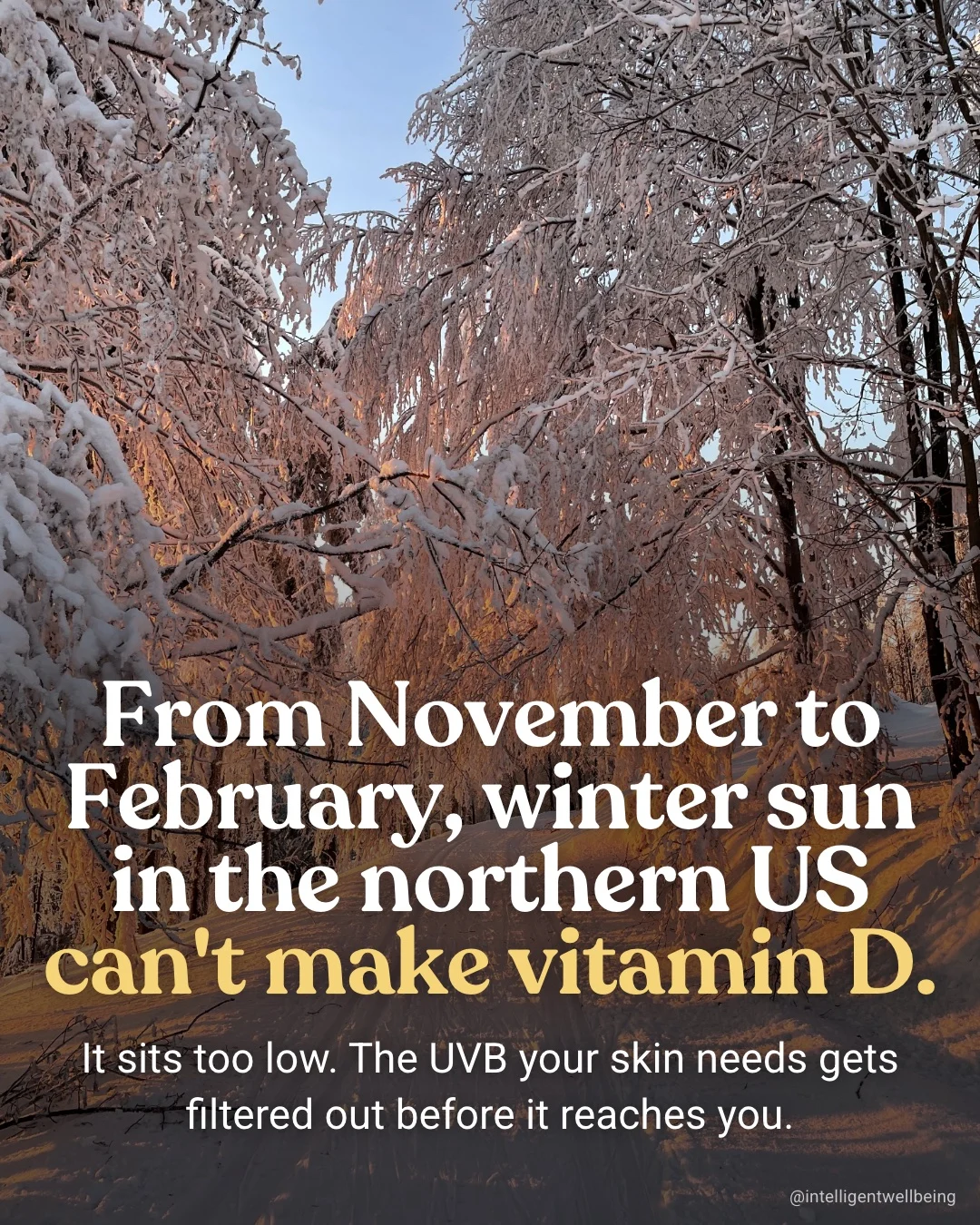
It is not just the weather. Around this time of year the sun drops low enough that your skin can’t make much vitamin D at all, and plenty of people walk into winter already short.
The sun is still out. It is just too low
Your skin makes vitamin D from UVB light. UVB is the short, energetic part of sunlight, and it is the first part to get filtered out when the sun sits low in the sky and its light has to travel through more atmosphere to reach you.
In summer, at midday, plenty of UVB gets through. In winter, across most of the northern US, very little does. You can stand in bright, cold sunshine for an hour and make close to nothing.
That is why winter tiredness and winter vitamin D tend to show up together, and why a sunny January walk is still worth taking for the light and the movement, just not for the vitamin D.
Boston’s winter sun made zero vitamin D
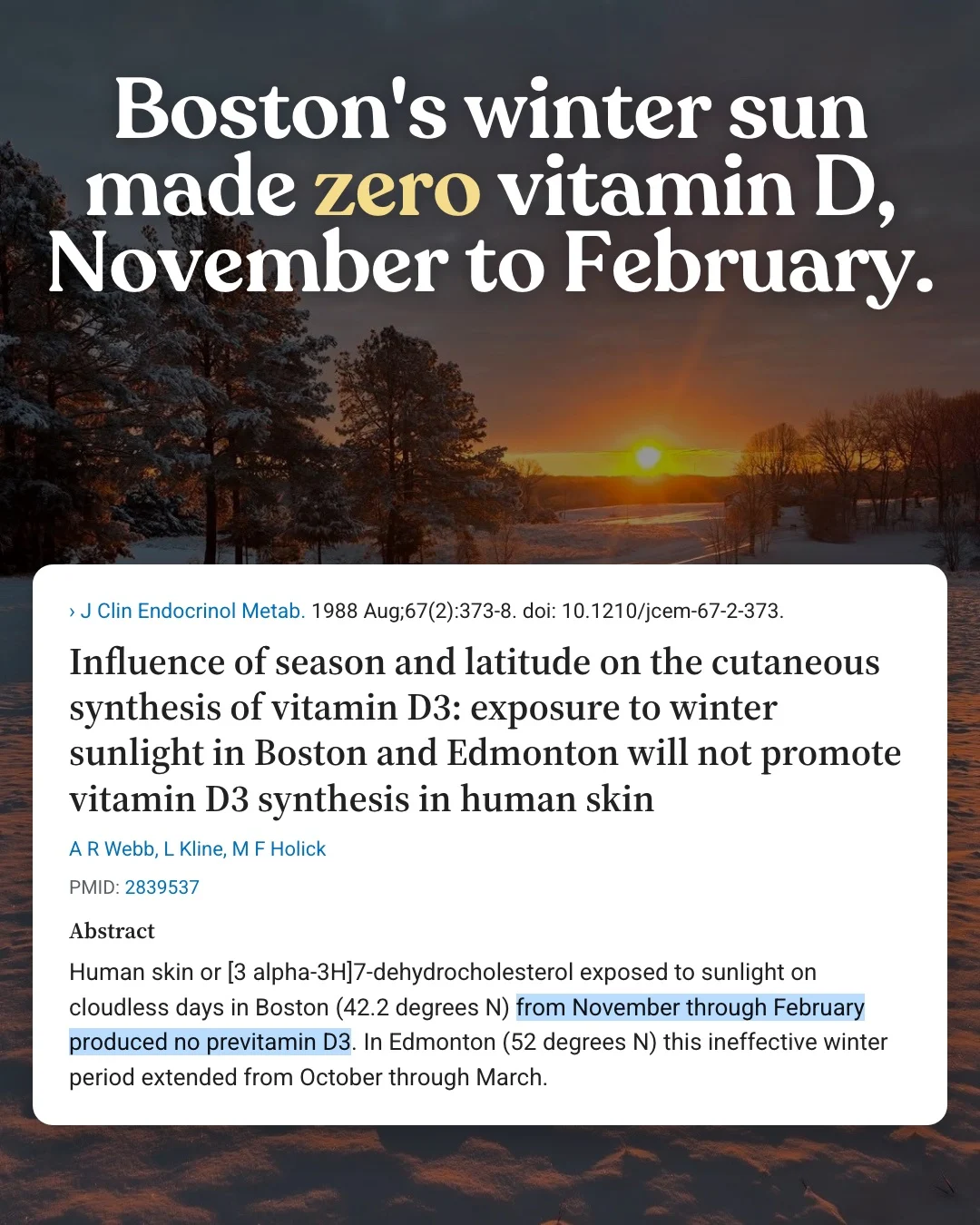
In 1988, researchers put human skin samples and the vitamin D precursor in skin out in natural sunlight, on cloudless days, month by month, in Boston and in Edmonton, Canada.
In Boston, at about 42 degrees north, the samples made no previtamin D from November through February. In Edmonton, further north, the zero months ran from October through March.
Boston sits at roughly the same latitude as Chicago, Detroit, and Pittsburgh. Minneapolis, where we are, is further north still. If you live above that line, your skin is mostly on a break until spring.
Most of us walk into winter already low
A large national analysis of US adults found that about 42% were deficient in vitamin D, defined as a blood level of 20 ng/mL or lower. The rate was 82% among Black adults and 69% among Hispanic adults, because darker skin makes vitamin D more slowly from the same sunlight.
Other things push the number down too: working indoors, sunscreen every day, living further north, carrying more body fat, and getting older. None of these are failures. They are just modern life.
Deficient in vitamin D (20 ng/mL or lower) in national survey data.
Highest rate in the same analysis. Darker skin makes vitamin D more slowly.
Second highest. Indoor work and latitude add to it.
You can stand in bright winter sun for an hour and make close to nothing.
Test it. Don’t guess
Low vitamin D can look a lot like a winter slump: tired all day, low mood, aches, catching every cold that goes around. Those symptoms have plenty of other causes, which is exactly why guessing is a bad plan.
The test you want is called 25-hydroxy vitamin D. It is a simple blood draw. With a real number, you and your doctor can decide whether you need to supplement at all, how much, and when to retest. More is not automatically better. Vitamin D is fat-soluble and can build up if you take a lot for a long time.
A realistic winter plan
Nothing extreme. Just the basics our grandparents did without thinking about it.
- 1Get outside in the morning anyway
Winter light won’t make vitamin D, but morning daylight helps set your body clock, your sleep, and your mood.
- 2Eat the foods that carry it
Salmon, sardines, mackerel, egg yolks, and cod liver oil are the classic winter sources.
- 3Move every day
A gray-day walk counts. Movement and daylight together are the best free mood support there is.
- 4Check your number once
Ask for a 25-hydroxy vitamin D test, ideally before you start or change a supplement.
- 5Retest in spring
If you supplement over winter, a spring retest tells you whether the dose made sense.