Free Drop No. 10 · November 2026
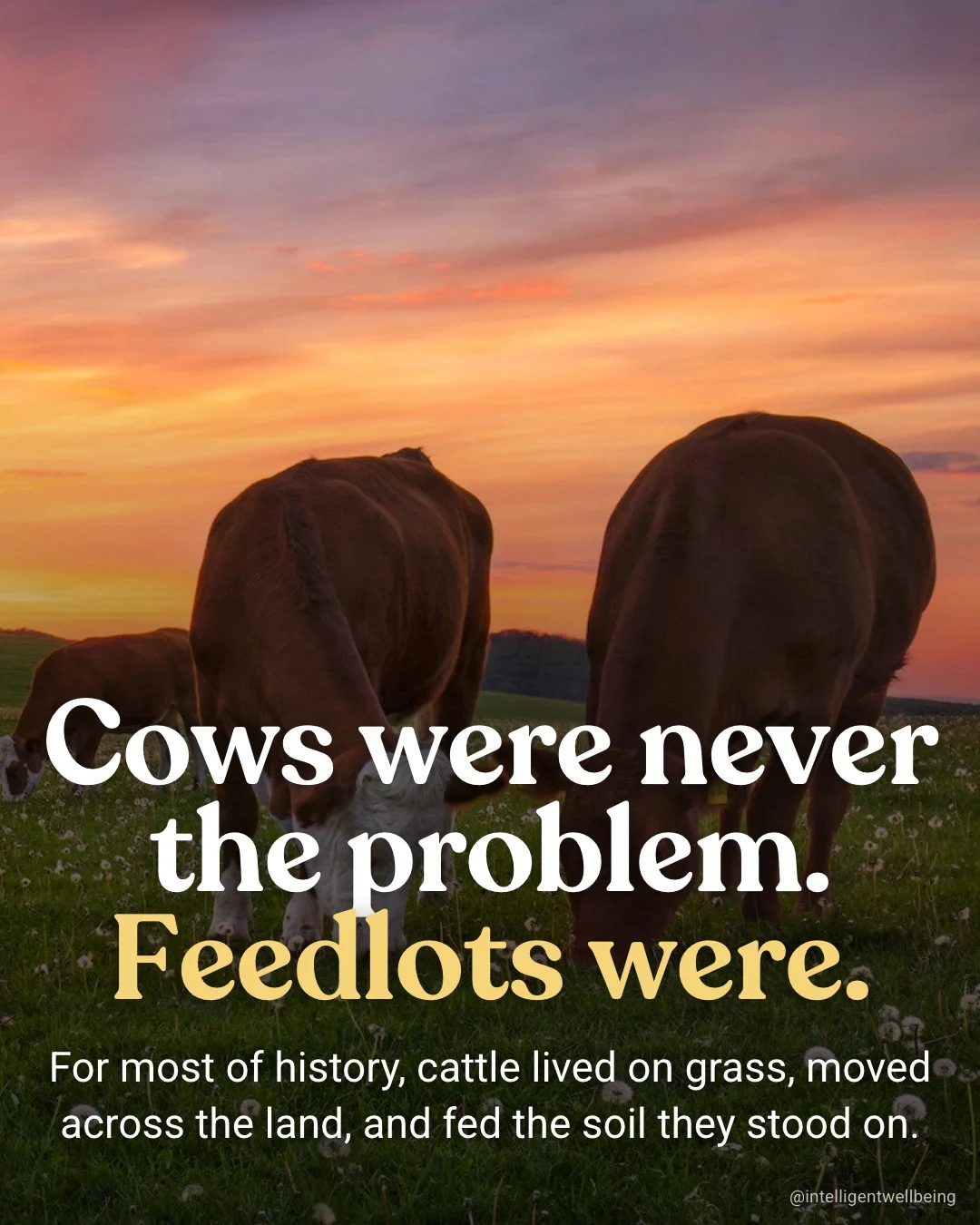
Cows Were Never the Problem
How the animal that turns grass into milk, meat, leather, and tallow got blamed for the way we chose to raise it.
Cows get blamed for a lot. Most of the problems come from how we raise them, not from the animal. On grass, moving across the land, a cow turns plants we can’t eat into food, leather, and the tallow in our skincare.
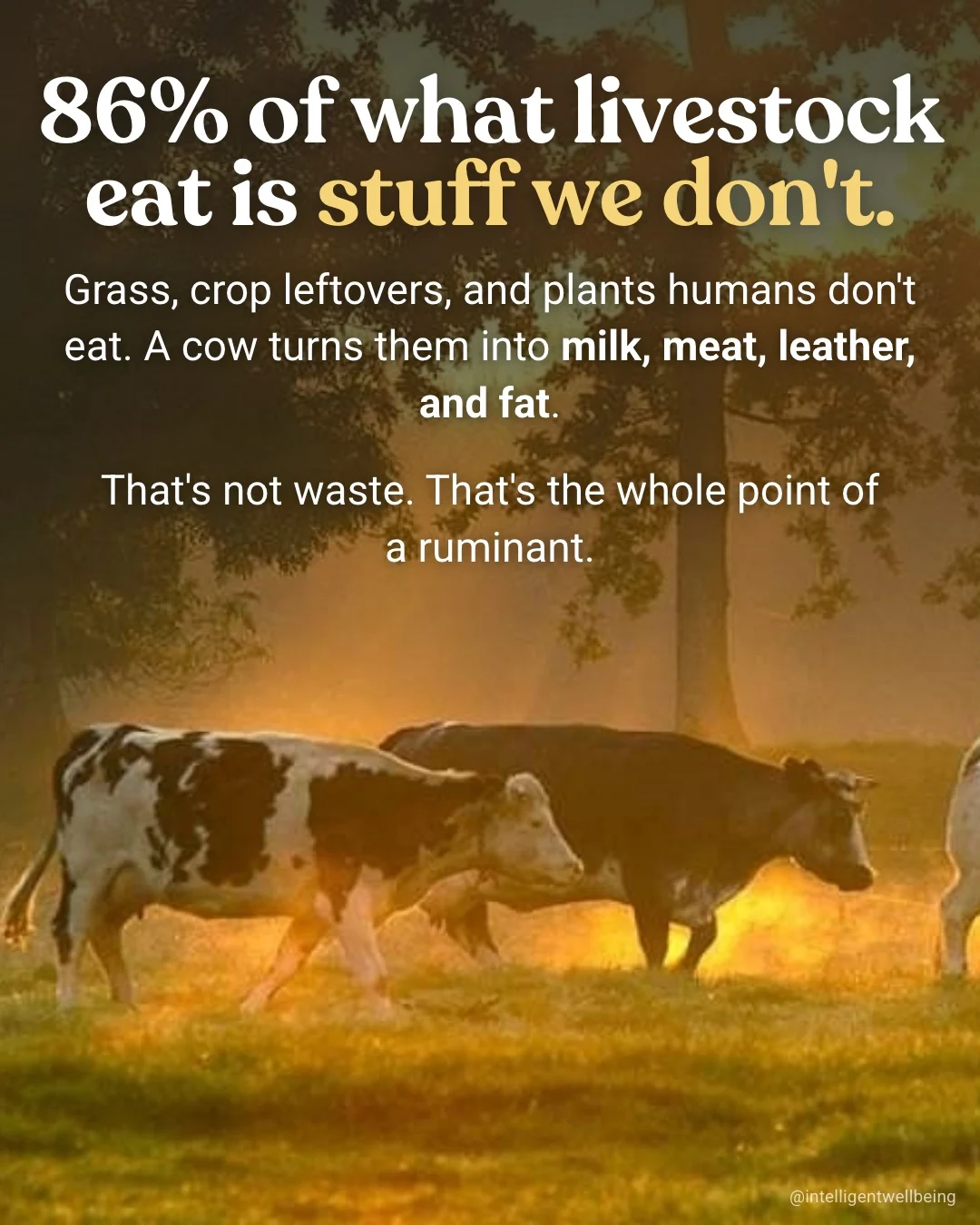
86% of what livestock eat is stuff we don’t
A 2017 analysis from the UN’s Food and Agriculture Organization estimated that livestock eat about 6 billion tonnes of feed a year, and that 86% of it is material people don’t currently eat: grass, leaves, crop leftovers, and byproducts.
That is the quiet genius of a ruminant. A cow’s four-chambered stomach turns tough plants into milk, meat, fat, and leather. Grassland that can’t grow vegetables can still grow cattle.
It isn’t perfect. The same analysis found that ruminant systems still use about 2.8 kilograms of human-edible feed, like grain, for every kilogram of boneless meat. Which brings us to the real issue.
The animal didn’t change. The system did
For most of history, cattle lived on grass, moved across the land, and fed the soil they stood on with their manure. The modern feedlot flipped that. Cattle are packed into lots and finished on grain that people could have eaten, while the manure piles up in one place instead of feeding a pasture.
When people say cows are bad for the planet, they are mostly describing that system. Grass-fed and well-managed grazing looks very different: fewer inputs, healthier soil, and animals doing what they were built to do.
When people say cows are the problem, they are mostly describing the feedlot.
Tallow was the original moisturizer
Rendered beef fat was soap, candles, leather conditioner, and skin balm for centuries. It was the obvious choice: shelf-stable, rich, and already on hand from an animal you were using anyway.
Tallow is made of fatty acids like palmitic, stearic, and oleic acid, the same kinds found in your skin’s own oils. That is why it feels at home on skin instead of sitting on top of it. It is also why we build our balms and soaps around grass-fed tallow.
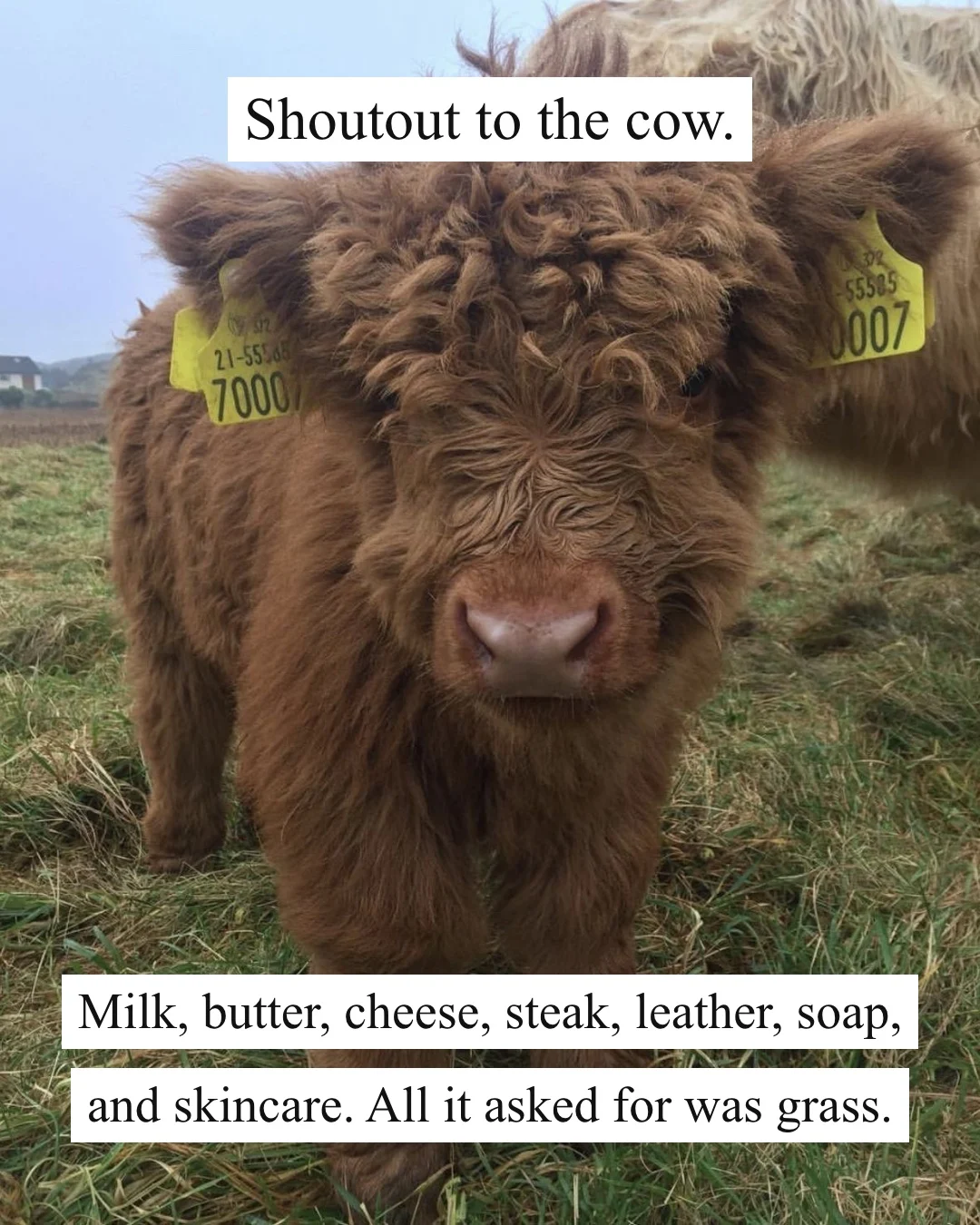
Shoutout to the cow
One grass-fed animal can feed a family for months, become leather that lasts decades, give tallow for soap and skin, bones for broth, and manure that feeds next year’s grass.
Nose-to-tail used to be common sense. Using every part is the most respectful way to raise an animal, and the least wasteful.
Vote with your dollar
You don’t need to buy a farm. A few choices send a clear signal.
- 1Look for grass-fed and grass-finished
“Grass-fed” alone can still mean grain at the end. Grass-finished means grass the whole way.
- 2Buy from a local rancher
A quarter or half cow in the freezer is often cheaper per pound than the store.
- 3Use the whole animal
Make broth from the bones. Cook with the tallow. Try the cheaper cuts.
- 4Choose real leather that lasts
One good pair of boots beats five pairs of plastic ones.
- 5Pick tallow over petroleum on your skin
Swap the jelly for a balm made from fat your great-grandmother would recognize.