Free Drop No. 5 · June 2026
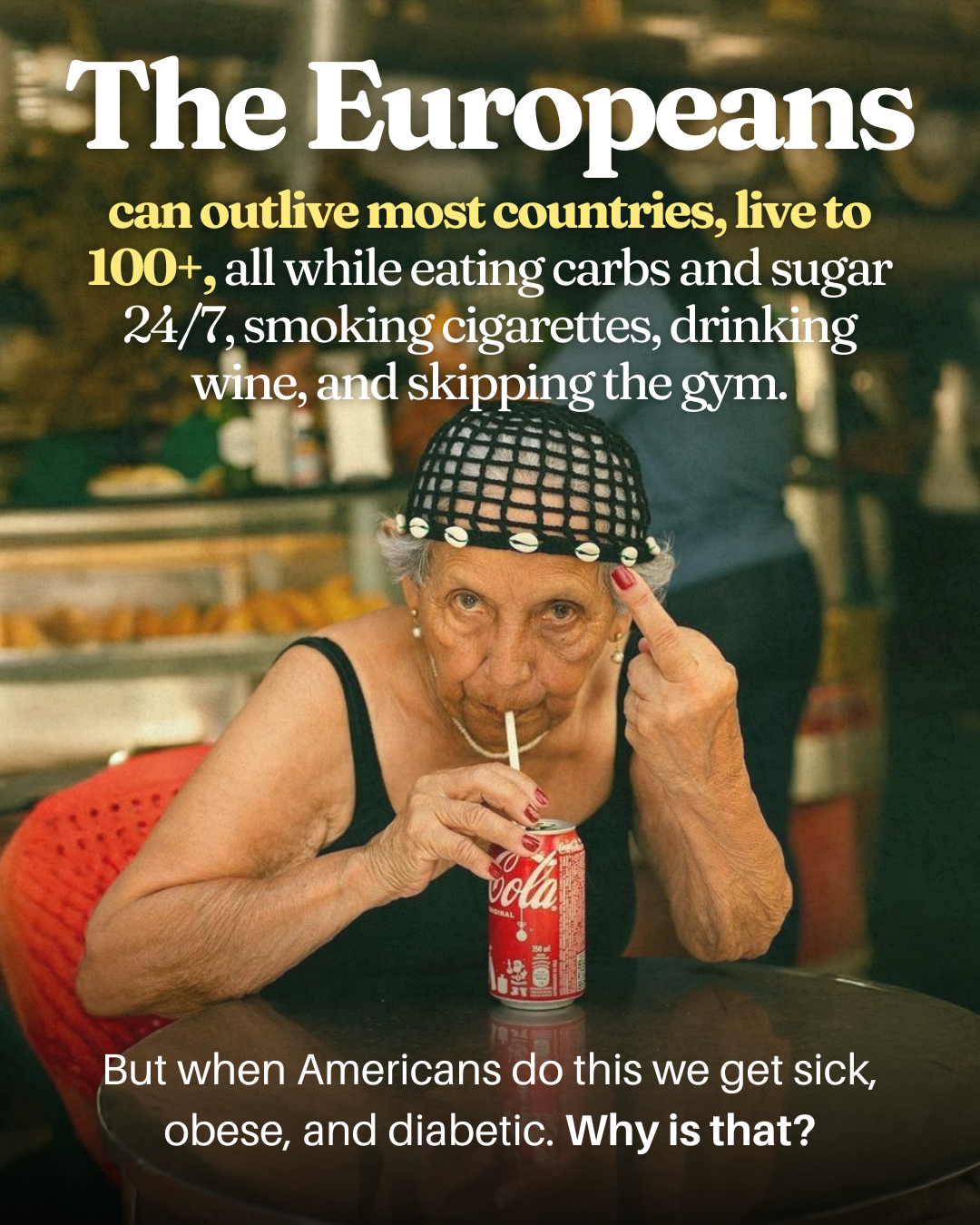
The Europeans
They eat pasta, drink wine, smoke cigarettes, skip the gym, and statistically live longer than us. Here is everything they are doing differently — and what you can actually steal from it without moving to Tuscany.
At some point, Americans decided health was something you optimize, biohack, and purchase in a tinted supplement bottle. Europeans, largely, never got the memo — and their longevity data suggests this is working in their favor. This drop is the debrief on what they are actually doing differently, and why it is considerably simpler, and more fun, than anything on your tracking app.
The Europeans are not the outliers. We are.
The Europeans are not a wellness miracle. They are not doing anything particularly radical. They are, in a meaningful sense, the baseline — a closer approximation of how humans have lived for most of recorded history, before the industrial food system, the car-dependent suburb, and the 50-hour work week became aspirational. They preserved more of the structure. We optimized ours away. The two infographics below show what that divergence looks like in the body, at national scale.
The obesity comparison is not a mild difference. It is a different category entirely. Most of Europe sits under 20% adult obesity. Romania, notably, at 9%. Oklahoma, the labeled outlier on the US map, sits at 37%. There is no comparable European data point. And the life expectancy chart is the part that should prompt the most reflection: the US is not just behind comparable countries — it has been falling further behind every decade since 1980, despite spending more on healthcare per capita than any nation on earth. More spending. Worse outcomes. The strategy is not working.
The good news is that the interventions are not pharmaceutical. They are behavioral. They are cheap. And the Europeans have been running the experiment for centuries.
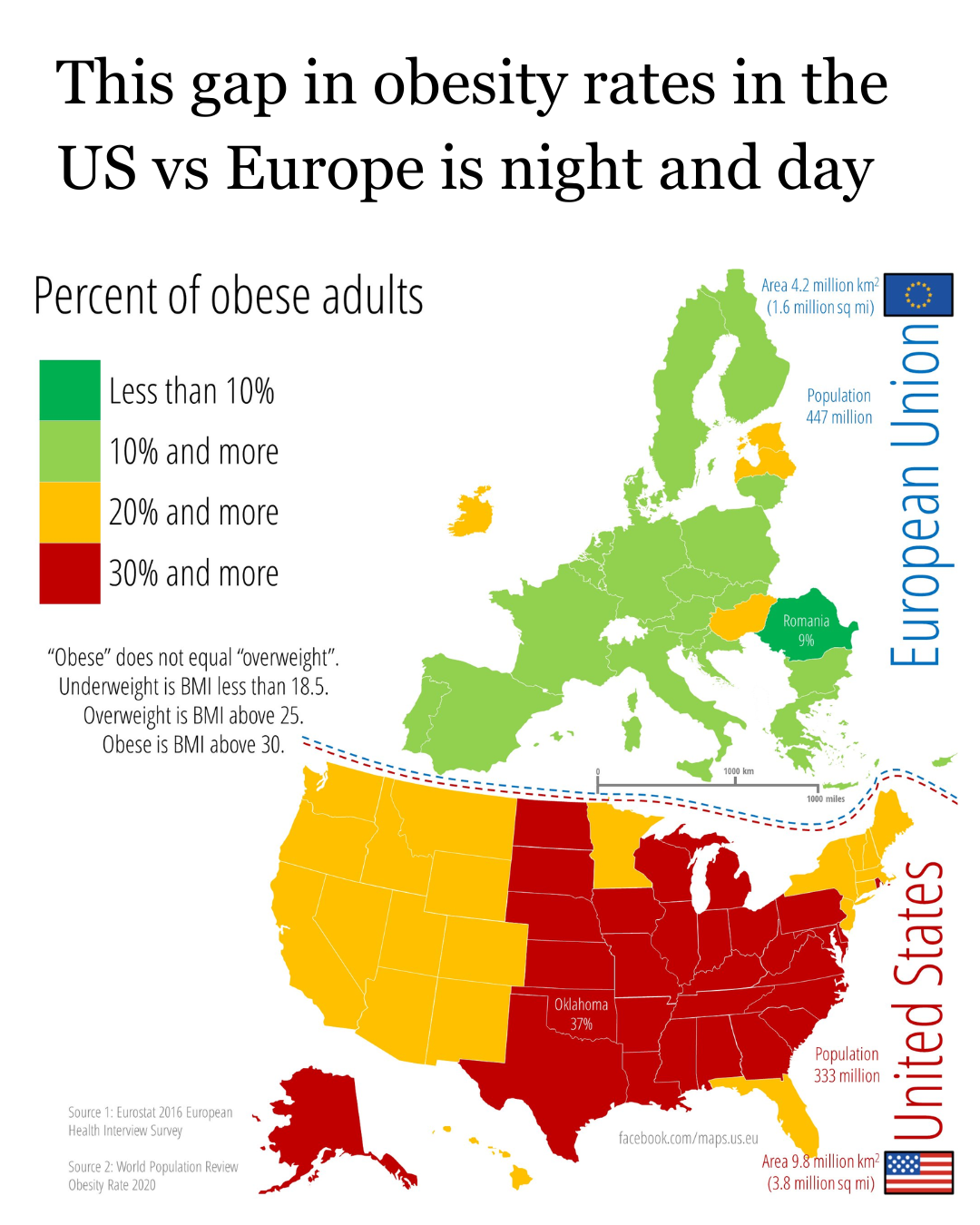
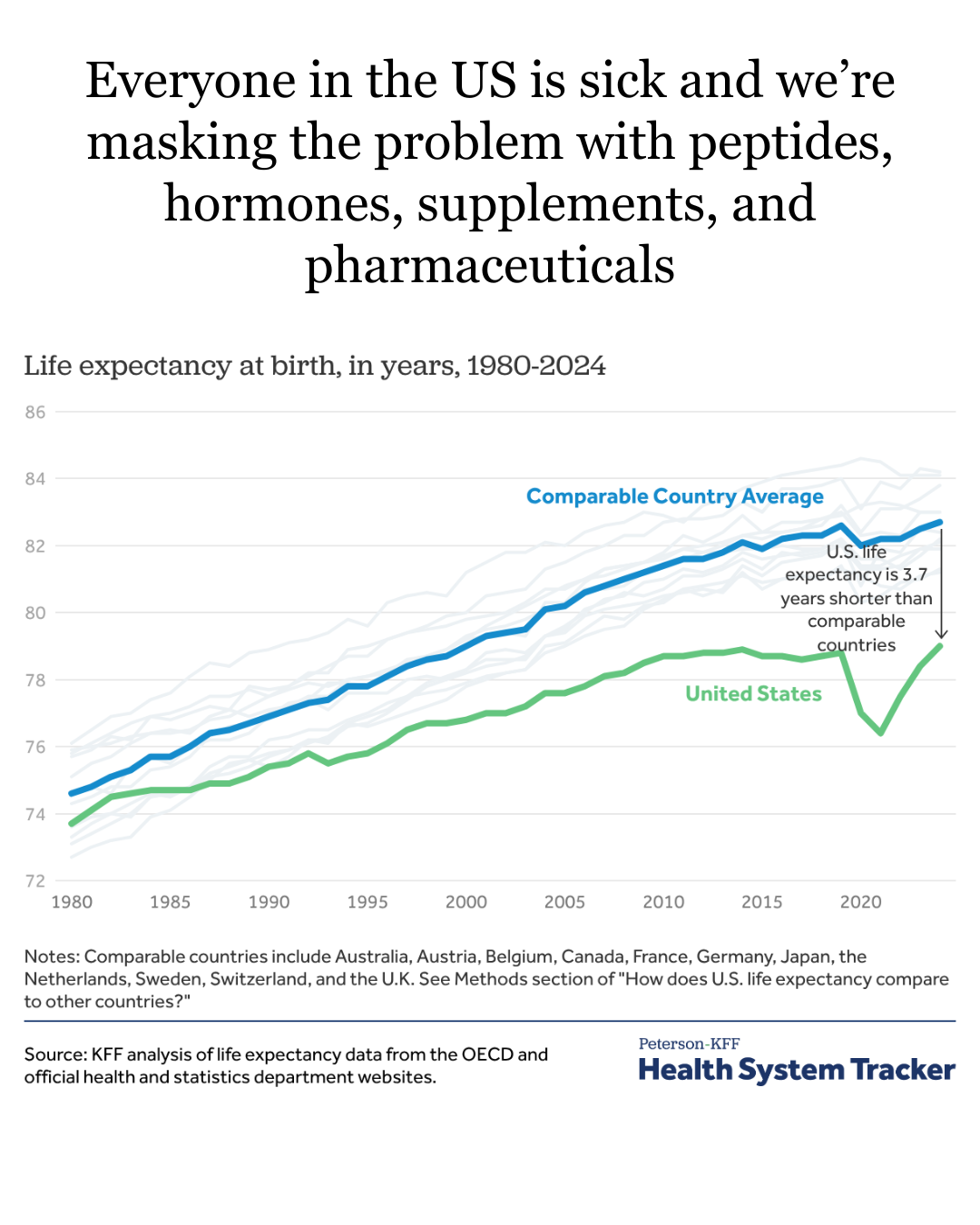
We are spending more on healthcare than any country on earth. The return on that investment, measured in years of life, is a 3.7-year deficit. The strategy is not working.
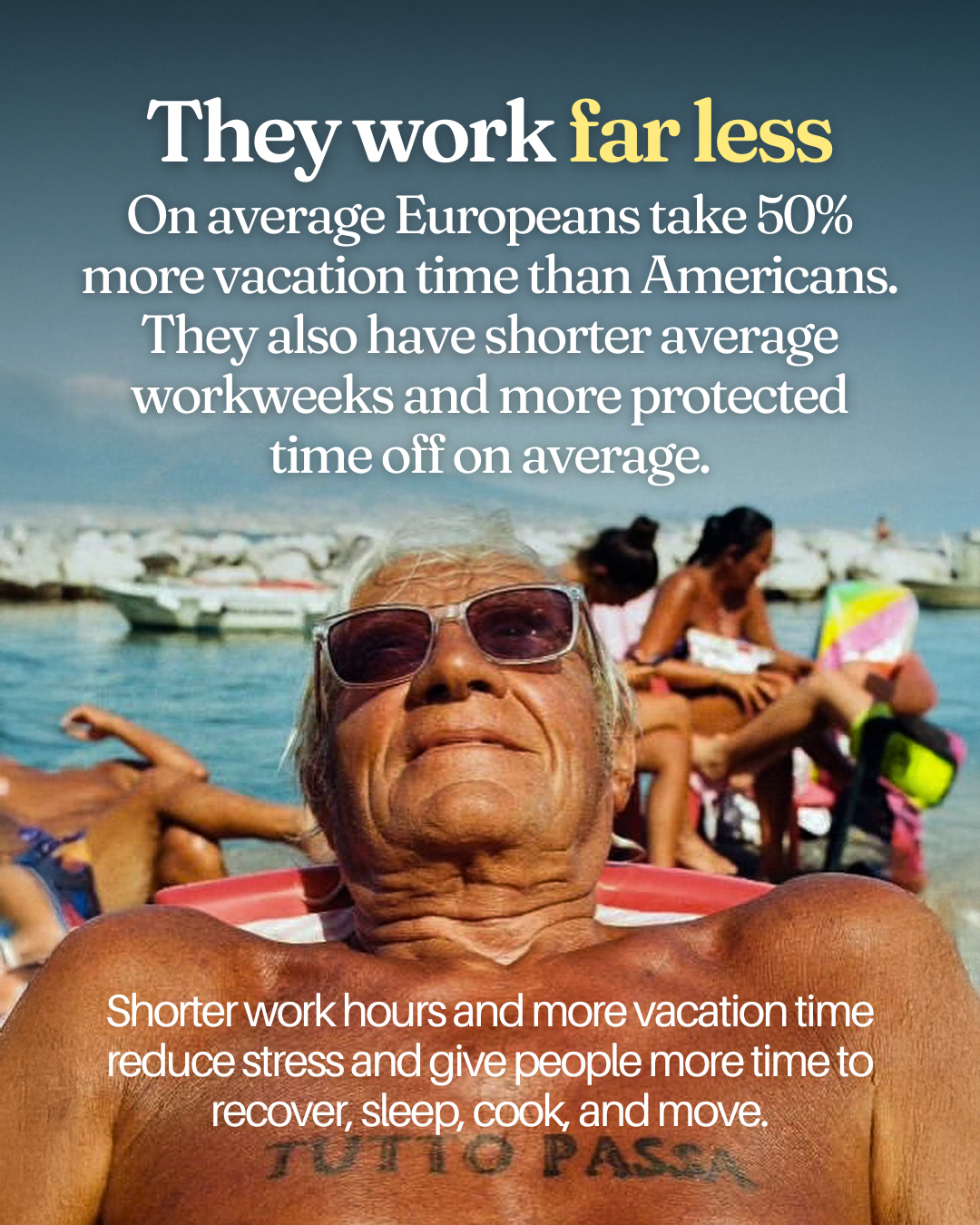
Europeans take 50% more vacation time than Americans. This is not a coincidence.
Tutto passa — everything passes. It is a philosophy you can tattoo on your chest or quietly install into how you move through a year. Either way, the physiology behind it is real: the absence of chronic urgency is one of the most underrated variables in long-term health, and the Europeans built the time to practice it directly into the structure of their working lives.
On average, Europeans take 50% more vacation time than Americans. They also work shorter weeks — the average French worker logs around 35 hours; the average American professional, closer to 47. In Germany, workers receive a minimum of 20 paid vacation days by law. Austria, 25. France, 30. In the United States, no federal law requires a single paid vacation day. The US is one of the only developed economies in the world with no statutory minimum. The result is a workforce that is chronically under-rested and culturally proud of it.
The physiological consequence of chronic overwork is well-documented. Sustained elevated cortisol disrupts sleep architecture, increases systemic inflammation, impairs gut function and immune response, and accelerates metabolic dysfunction. The recovery period is not optional — it is when the body repairs, consolidates memory, regulates hormones, and resets the nervous system. Skipping it is not a productivity hack. It is a debt that accumulates with compounding interest.
The concept of tutto passa is not just philosophical. It is biological. Stress is not the problem. The absence of recovery is. The Europeans built the recovery into the structure of the year. We sold it to ourselves as something that must be earned rather than assumed — and that framing alone changes how often people actually take it.
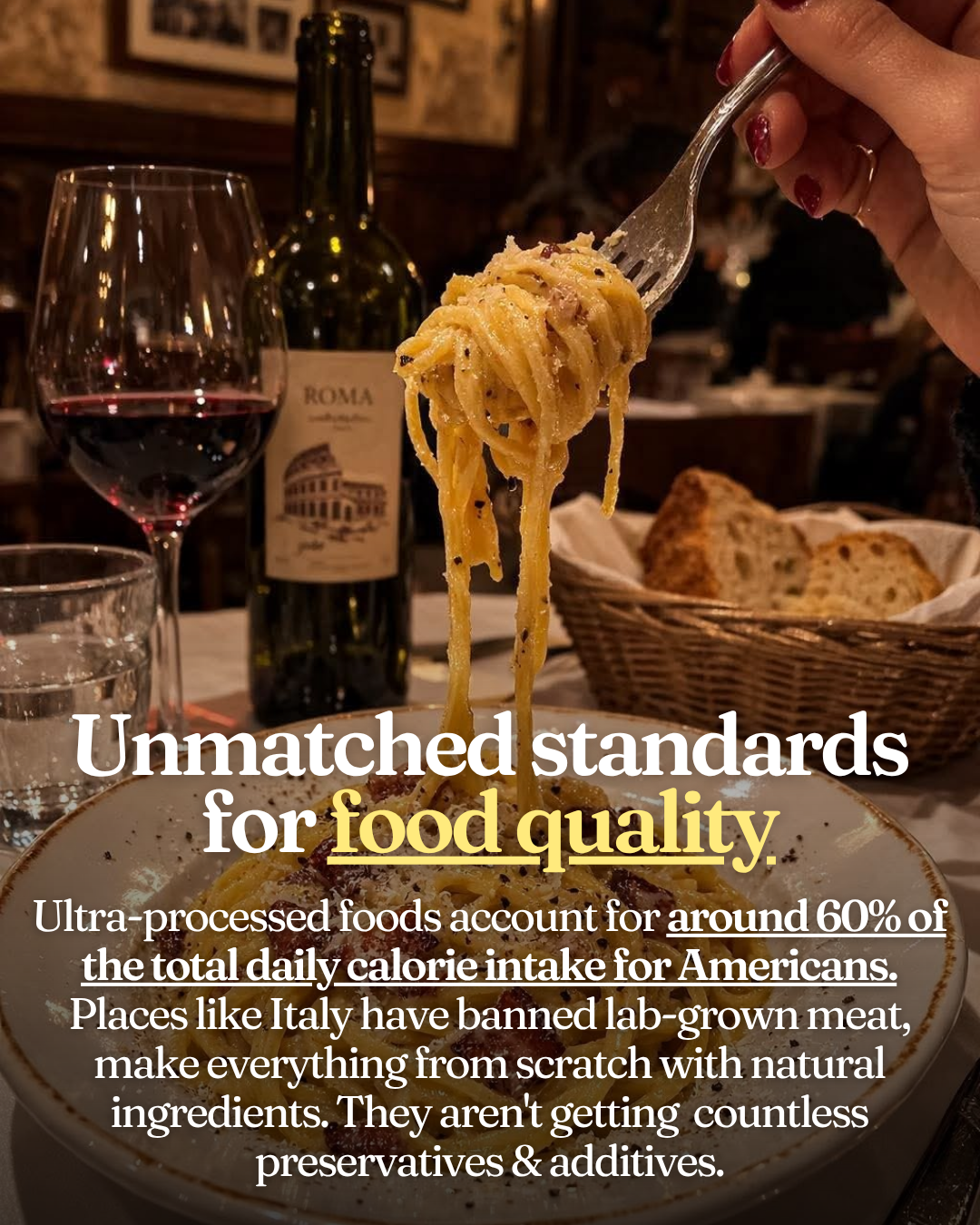
The issue is not pasta. The issue is what’s in the pasta.
A quick thought experiment: name the ingredients in a spaghetti carbonara. Pasta, egg yolk, guanciale, Pecorino Romano, black pepper. Five things. You can picture all of them. Now try to name the ingredients in a standard American grocery-store pasta sauce from the shelf. You will need the label, a magnifying glass, and some prior knowledge of food chemistry to get through the final third of it.
There is nothing wrong with pasta. The Italians have been eating it daily for centuries and the longevity data does not reflect any pasta emergency. The issue is not macronutrients. The issue is what is being done to the food before it arrives at the plate. Ultra-processed foods — products engineered for hyper-palatability using combinations of fat, sugar, salt, and synthetic additives that do not exist in nature — now account for approximately 60% of daily caloric intake for the average American. The EU has banned more than 1,300 food additives and colorings that remain legally permitted in the US food supply, including several linked to inflammation, disrupted gut microbiome, and increased cancer risk in long-term exposure studies.
Italy has gone further than most — banning lab-grown meat entirely, maintaining strict Protected Designation of Origin rules that legally require traditional foods to be made with specific regional ingredients by specific methods, and sustaining a cultural standard that treats highly processed products as something other than food. When a population broadly agrees that food should be made from recognizable ingredients, the market aligns to that standard. That agreement has largely broken down in the US, and the metabolic data is the result.
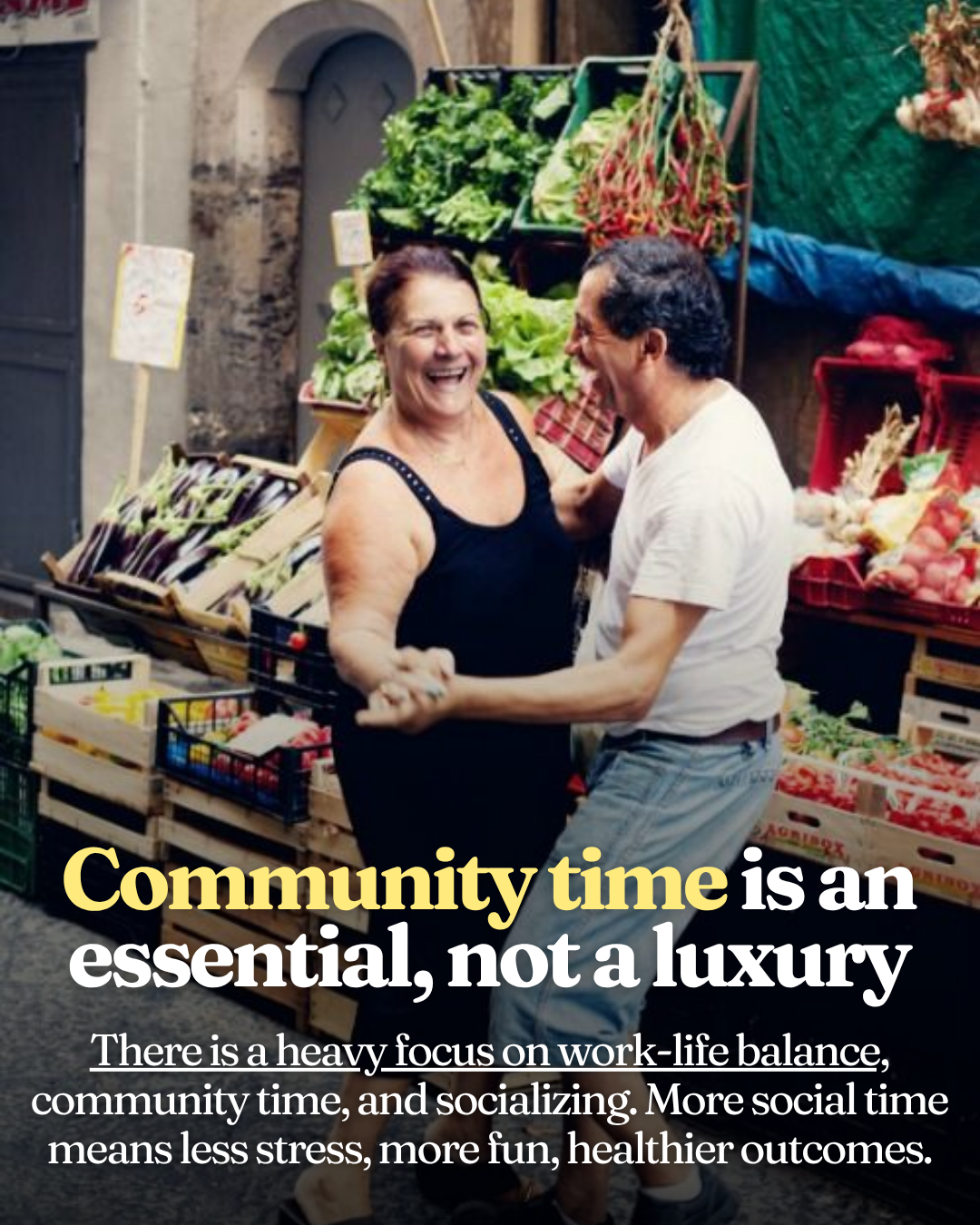
Community time is not optional in Europe. It is structural.
The European approach to social connection is not events-based. It is ambient. The same faces at the same bar every morning. The neighbor in the piazza. The Wednesday market that turns into a conversation that goes nowhere in particular and still counts. Low-effort, high-frequency, unscheduled — which is exactly what the research identifies as the most biologically effective form of social contact.
Social connection is not a soft wellness topic. Researcher Julianne Holt-Lunstad’s widely cited meta-analysis found that social isolation is associated with a 45% increased mortality risk — roughly equivalent in physiological impact to smoking 15 cigarettes per day. The research on Blue Zones — geographic regions with unusually high concentrations of centenarians — consistently identifies strong social ties and community integration as one of the most reliable predictors of longevity alongside diet and physical activity. Not one of the secondary factors. One of the primary ones.
European culture treats community time as structural, not optional. The long Sunday lunch. The evening passeggiata. The same faces at the same bar every morning at the same time. The market. These are not luxuries. They are the architecture of low-effort, high-frequency social contact — which is exactly what the research identifies as most beneficial. Not scheduled quality time. Just being around people you actually like, regularly, without an agenda. Loneliness is a public health crisis with no supplement for it. Time with people you like, done consistently, is the intervention.
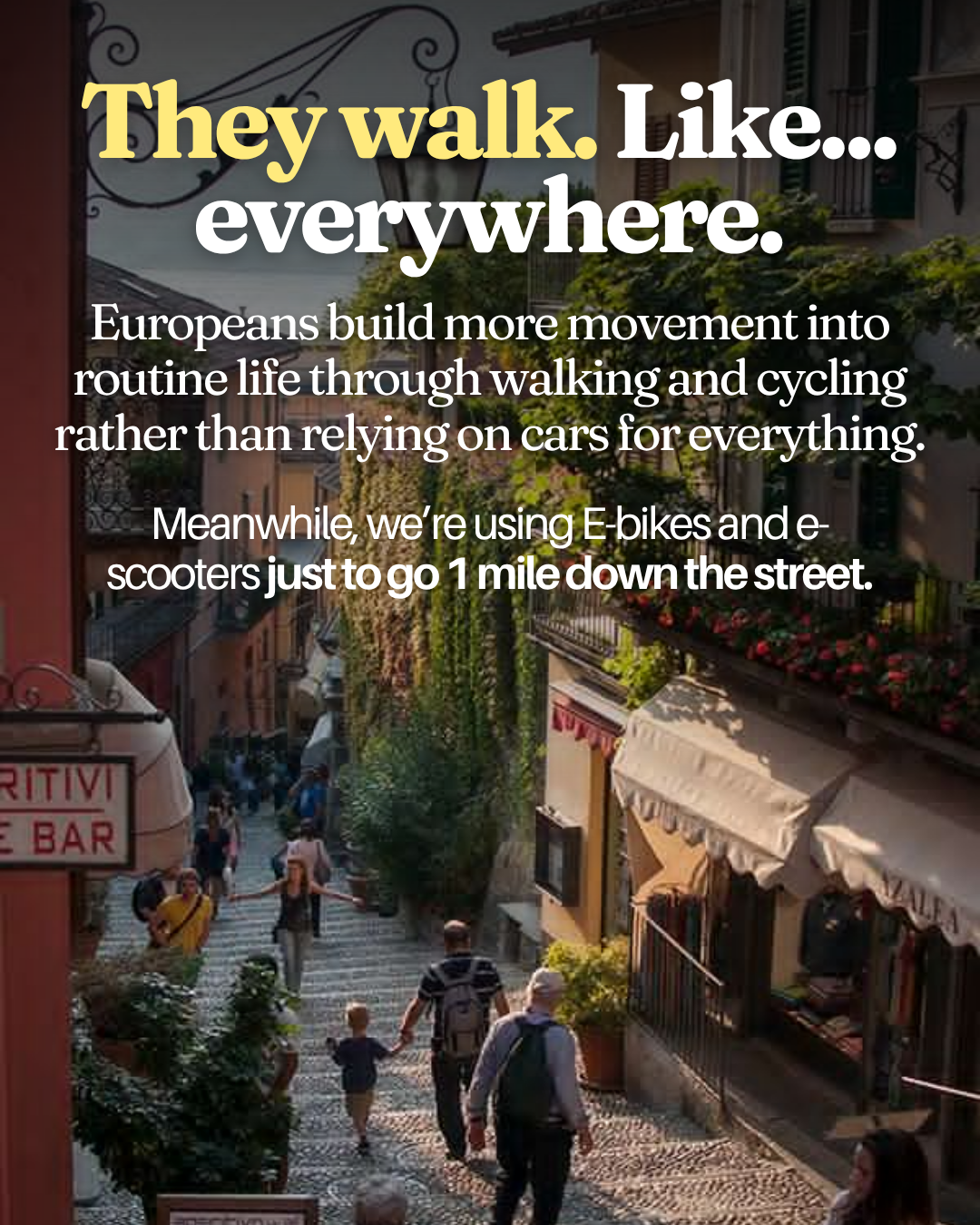
They don’t schedule exercise. They walk to the bakery.
Europeans do not generally have fitness routines in the American sense. They do not have step-count goals or scheduled gym slots. They walk to the bakery. They walk to the market, the café, the wine bar, and home from all of those places. They cycle to work. They take stairs. Cities built for pedestrians before cars existed produce pedestrians as a natural byproduct of ordinary daily life — not as an act of willpower or a wellness decision.
The mechanism here is NEAT: Non-Exercise Activity Thermogenesis. Research from Dr. James Levine at the Mayo Clinic showed that habitual daily movement — walking, standing, climbing stairs, moving between rooms — can account for 300 to 500 additional calories burned per day compared to a sedentary individual, depending on the person. Over a year, this is the metabolic equivalent of running two to three marathons. And unlike scheduled exercise, it requires no motivation, no recovery day, and no subscription.
The US e-bike and e-scooter boom is an interesting data point here. Americans are now using micro-vehicles to travel distances of one or two city blocks — trips that, in any European city, would simply be walked without a second thought. The infrastructure shapes the behavior. The behavior shapes the body over a lifetime. You cannot supplement your way out of a sedentary physical environment. But you can choose to walk the short trips this week, and most of the trips next week, and let the accumulation do what the research says it does.
Daily walking predicts longevity better than most scheduled exercise programs. Europeans do it accidentally. We have to engineer it deliberately. Both outcomes are the same.
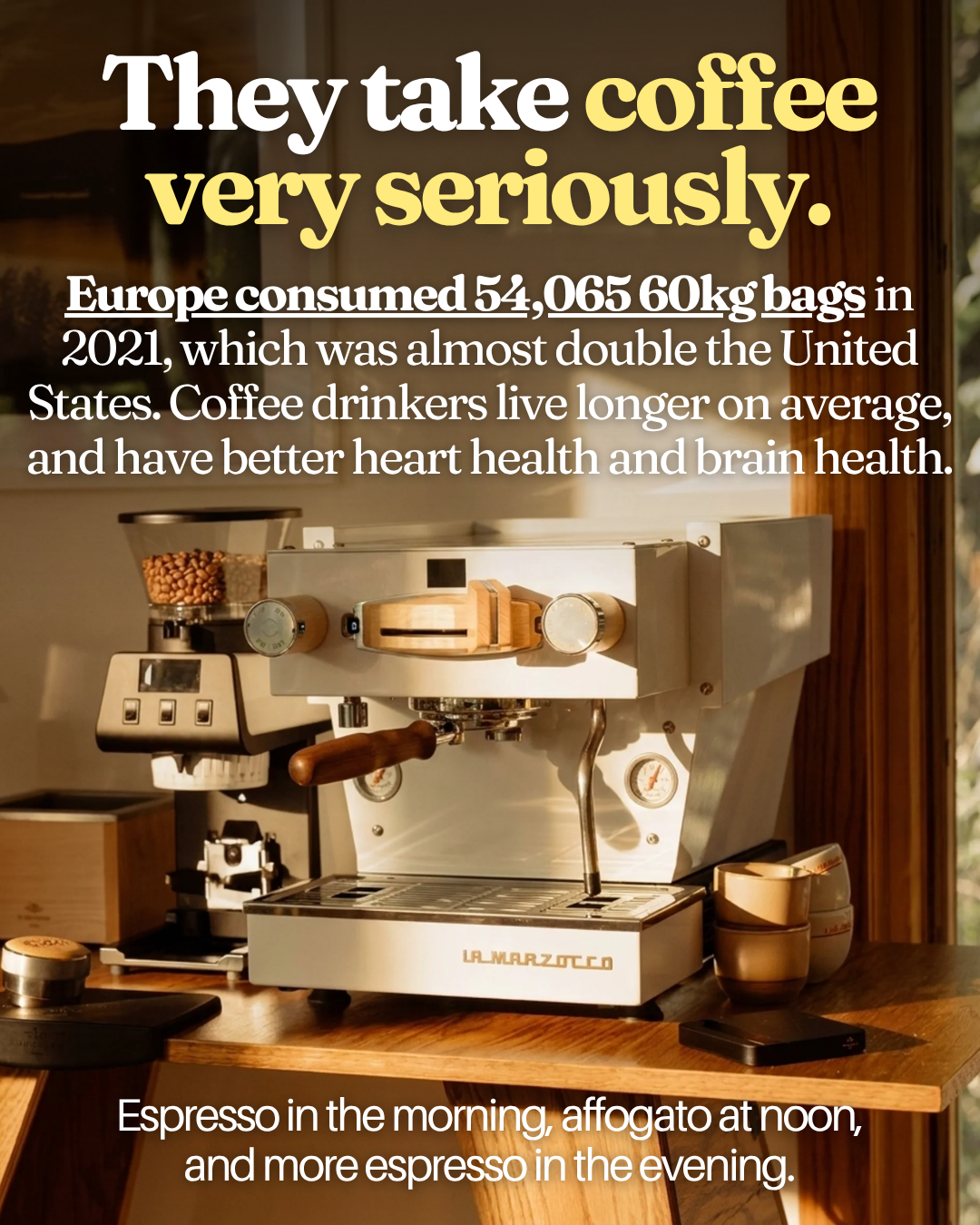
Espresso in the morning. Affogato at noon. More espresso in the evening.
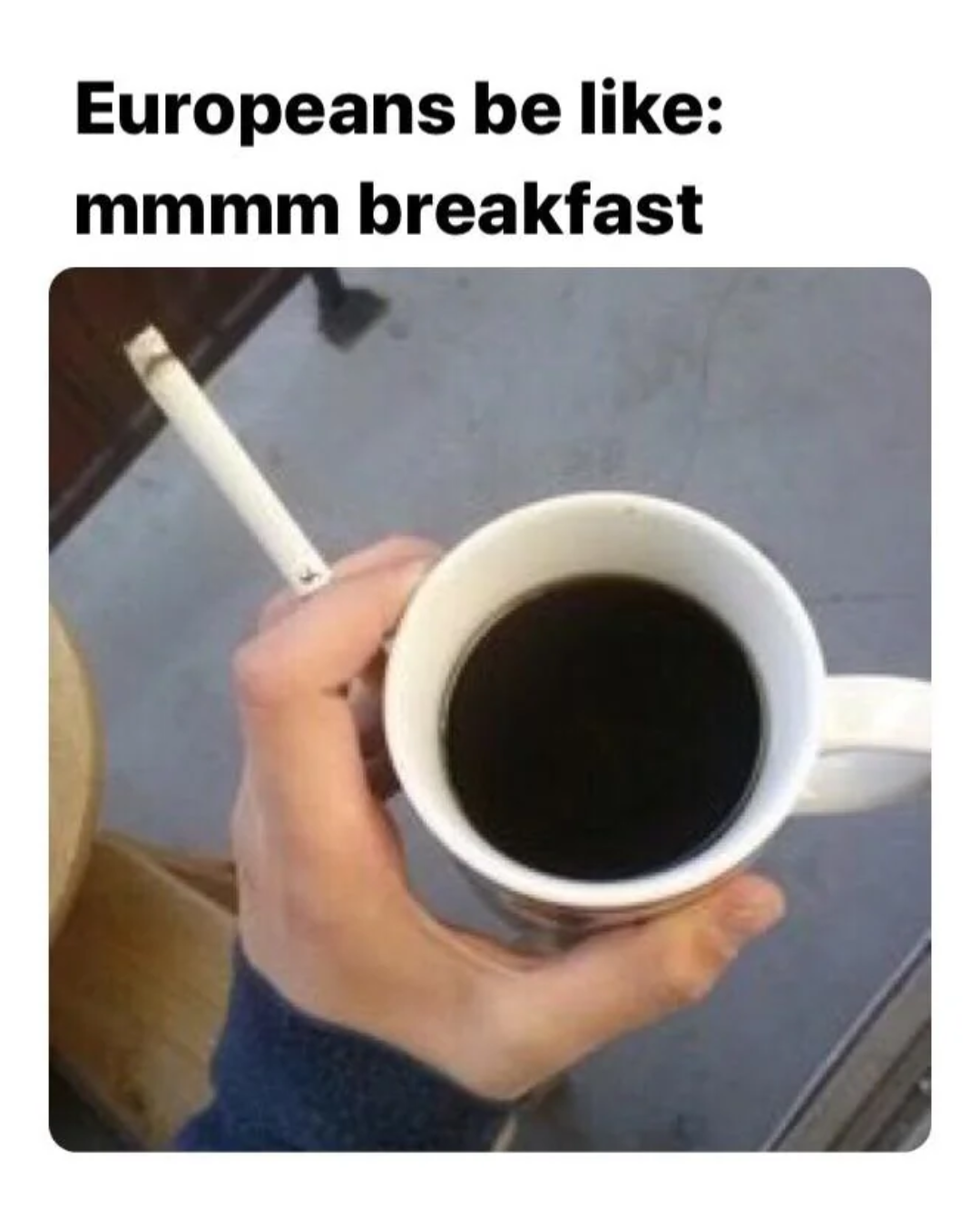
Let’s address the obvious: the meme below shows a European’s breakfast as a cigarette and a black coffee. This is accurate. And yet, somehow, they are still outliving us. The cigarette is a real health liability — smoking rates are genuinely higher in several European countries than in the US, which is a legitimate problem the longevity data has to fight against, not alongside. The coffee, however, is doing something very different.
Coffee — specifically well-made espresso consumed at intentional moments in the day — is among the most extensively researched beverages in nutritional science. Three to five cups per day is associated across multiple large cohort studies with reduced risk of type 2 diabetes, Parkinson’s disease, liver disease, certain cancers, and cardiovascular events. The mechanism involves polyphenols, antioxidants, and chlorogenic acids — compounds more concentrated in a properly pulled espresso than in a 20-ounce drip coffee with caramel syrup and oat milk consumed in a car.
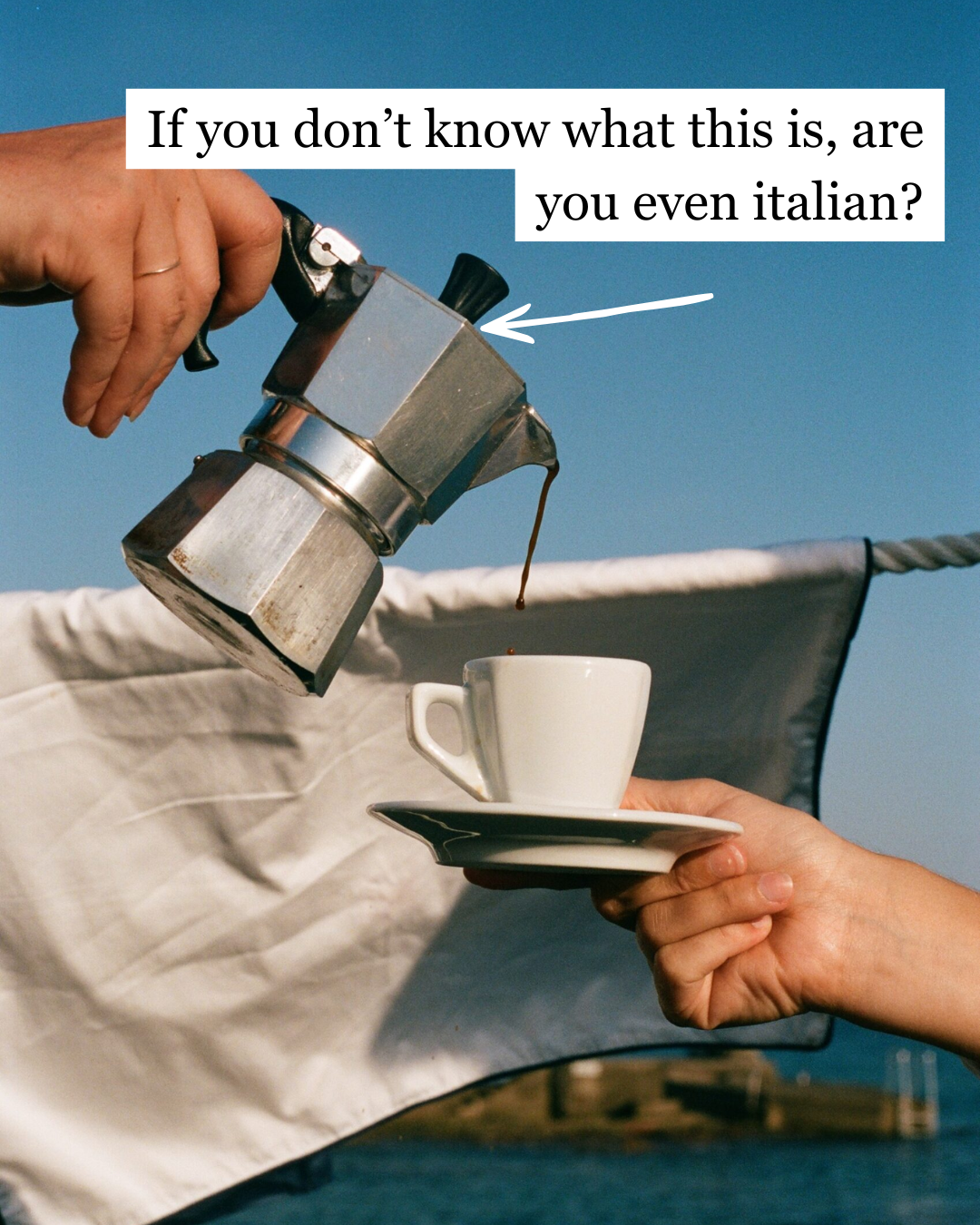
But the deeper thing is ritual. In Italy, coffee comes with rules: you drink espresso at the bar in the morning, standing, in approximately 45 seconds, for €1.10, and you leave. Cappuccino is for mornings only — the milk after 11am disrupts digestion, and no self-respecting Italian will do it. The moka pot at home is not a coffee maker. It is a ceremony. These rules insert intentional pauses into the day: brief, social, standing, and real. That is what the $7 iced oat latte consumed in traffic is structurally missing — and it matters more than the caffeine content.
The beach holiday is not a reward for a hard year. It is part of the system.
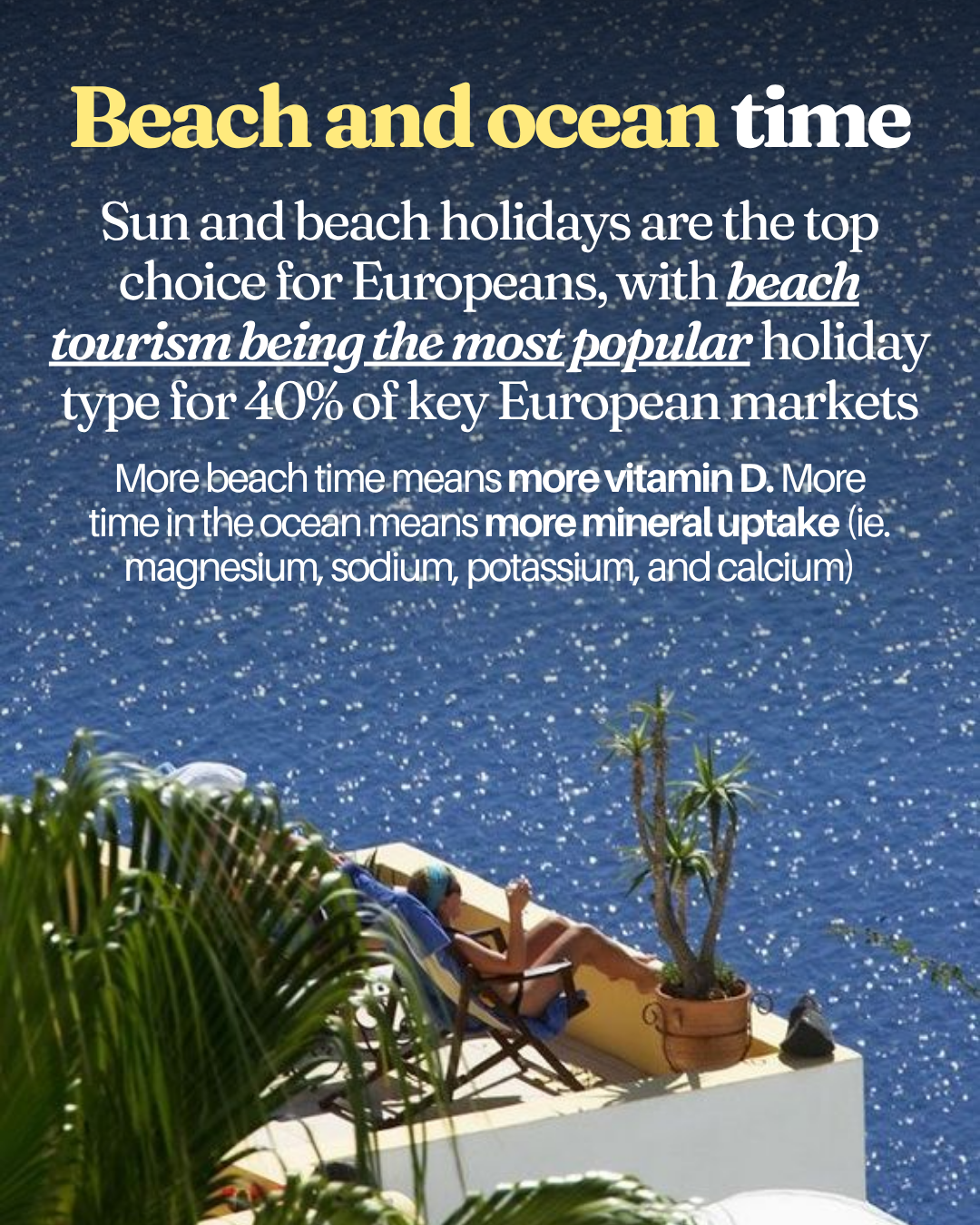
The European beach holiday is not a luxury for the affluent or the retired. It is a cultural expectation built into the annual rhythm of life the way summer school holidays are built into the American calendar — except far more universal and far more consistent. Sun and beach holidays are the most popular vacation type for 40% of key European markets. The concept of al mare — to the sea — is not optional for most Italian families. It is structural. It is assumed.
From a physiological standpoint, this is more significant than it sounds. Approximately 70% of Americans are estimated to be deficient in vitamin D — a hormone-like molecule synthesized by skin exposed to sunlight that influences immune function, mood regulation, metabolic health, bone density, and inflammatory response. Regular sun exposure, in the form of actual consecutive days in actual sun, is one of the most effective and underused ways to address a deficiency that is almost entirely a product of indoor, sedentary, high-latitude modern life. A supplement is a partial solution. A week at the beach is the original version.
Ocean swimming adds a separate layer. Seawater contains dissolved magnesium, sodium, potassium, and calcium — minerals that absorb transdermally during extended time in the water. Magnesium deficiency affects an estimated 50% of Americans and is associated with poor sleep, muscle dysfunction, anxiety, elevated blood pressure, and cardiovascular risk. Extended ocean time is mineral supplementation with significantly better scenery. The beach is not a treat. It is an input. The Europeans scheduled it into the year decades before anyone called it wellness.
You don’t have to move to Italy. You can start stealing today.
This is not about quitting your job, overhauling your diet in a weekend, or learning to say tutto passa with the correct accent. The European lifestyle advantage is mostly structural — built into the environment, the policy, the culture. You cannot fully replicate that from here. But you can tilt your habits toward the same principles, consistently, starting this week. None of the following costs more than $35 and most cost nothing.
-
1
Eat food you can name
Cook one meal a week from scratch using five or fewer recognizable ingredients. Then two. The goal is not perfection — it is reducing your ultra-processed food percentage by 10%, then another 10%. This alone has measurable effects on inflammation markers and metabolic health within weeks of consistent change.
-
2
Use your vacation days — all of them
The average American leaves 5.6 paid vacation days unused per year. This is not a badge of productivity. It is 5.6 missed cortisol-reset cycles. Book the trip now. Take the long weekend. Treat it as preventive care, because the physiological research says it is exactly that.
-
3
Take your lunch break outside
Walk somewhere for lunch. Not your desk. Somewhere. This stacks NEAT movement, a midday cortisol break, and natural light exposure into a single 30-minute window. Europeans do this by default. We have to choose it — but the outcomes are the same either way.
-
4
Get a moka pot and use it slowly
A Bialetti costs $35. Use it in the morning as a deliberate pause — no phone, not rushing, four minutes of standing in your kitchen making something real. The ritual is the point as much as the coffee. You are not optimizing caffeine delivery. You are inserting a moment of intention before the day begins.
-
5
Schedule the social time like a medical appointment
Americans wait until they are not busy to see the people they like. They are never not busy. Put a regular shared meal in the calendar and treat it as non-negotiable. The research on longevity says it is more important than your gym slot. It does not require reservations. A kitchen table and two people who actually like each other will do.
-
6
Walk the short trips
Identify the things you currently drive to that are within a 15-minute walk. Pick one this week and walk it. Not as a workout. As transportation. Repeat. The accumulation of this habit, done consistently over months, produces measurable metabolic changes that a twice-weekly gym session alone does not.
-
7
Plan a sun week
Book consecutive days somewhere with actual sun and, if possible, water you can get into. It does not need to be international. The goal is multiple days of natural light, outdoor movement, and physical activity that feels like leisure. This is the beach holiday, adapted to your actual geography. It addresses vitamin D deficiency, cortisol, and about four other things at once.
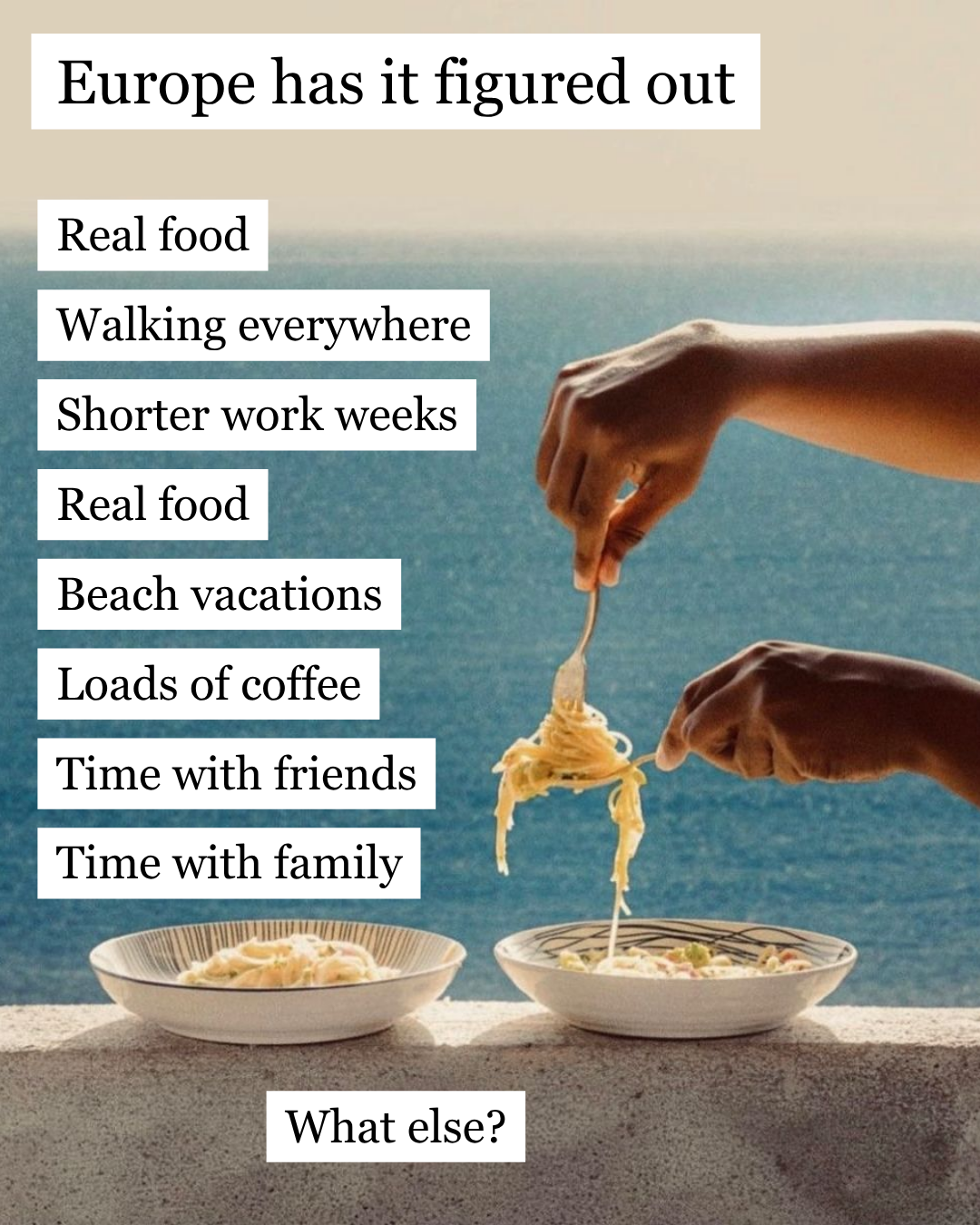
Everything on this list is free or nearly free. None of it requires a prescription, a specialist, or a supplement stack. The European longevity advantage is not a mystery — it is rest, real food, daily movement, sun exposure, and regular time with people you like. The genuinely hard part is building a life with structural space for all of it. That is a real problem, partly cultural and partly infrastructural, and it does not have a quick fix. But it can be moved toward, one deliberately unhurried Tuesday at a time.